


After 844 Days, Israelis to turn off clock marking time since Oct 7 attack
Published:
২৭ জানুয়ারী ২০২৬, ১৬:৫২
A clock in a central Tel Aviv square that symbolised the prolonged captivity of hostages taken during the October 7, 2023 Hamas attack will be switched off on Tuesday, 844 days after it began counting.
The decision follows the recovery in Gaza of the body of the last remaining hostage, Israeli police officer Ran Gvili, the Israeli military announced on Monday. Gvili, 24, was off duty and recovering from an injury when he was killed while fighting militants who infiltrated Israel during the 2023 attack.
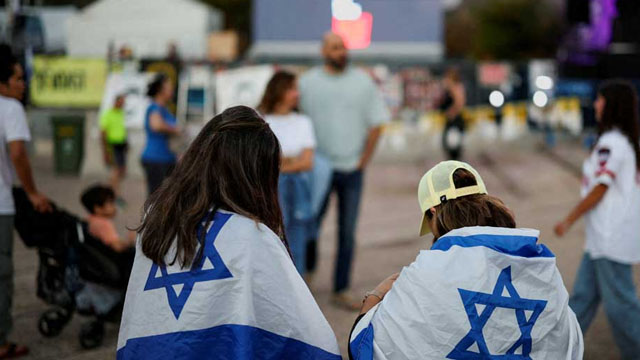
The digital clock, located in what became known as “Hostages Square,” served as a focal point for weekly demonstrations demanding the release of those abducted. Since the attack, thousands of Israelis gathered there regularly to pressure the government and international mediators to secure the hostages’ return.
Speaking to reporters after her son’s body was recovered, Gvili’s mother, Talik, thanked supporters who had stood by the family throughout the past 27 months.
“We have closure. Rani returned home an Israeli hero — truly an Israeli hero — and we are immensely proud of him,” she said.
Moment of National Healing
The return of the final hostage has been widely viewed in Israel as a moment of national healing. The October 7 attack, which left around 1,200 people dead, is regarded as the deadliest attack on Jews since the Holocaust and one of the most traumatic events in the country’s history.
The development also completes a key component of the initial phase of a U.S.-backed plan, led by President Donald Trump, aimed at ending the war. The second phase, announced earlier this month, includes reopening Gaza’s Rafah border crossing with Egypt.
For Palestinians in Gaza, the reopening of Rafah carries urgent humanitarian significance. Nour Daher, a 31-year-old resident suffering from a heart defect, said he hopes to cross the border to seek medical treatment abroad.
“I have the medical referral papers and registered with the World Health Organization. Now I’m waiting for my name to appear on their list,” he said. “They told me they were waiting for a country willing to take my case.”
Daher described experiencing near-daily episodes of severe heart palpitations and said he remains hopeful his condition will finally be treated.
Ceremony at Hostages Square
On Tuesday, Gvili’s sister Shira, along with former hostages and relatives of those taken captive, is expected to attend a public ceremony at Hostages Square as the clock is officially turned off, according to the Hostages and Families Forum.
Israeli officials said Gvili was shot while defending Kibbutz Alumim, near the Gaza border, and was later taken into Gaza by militants from Islamic Jihad, a Palestinian group that joined the Hamas-led attack.
The handover of all remaining living and deceased hostages was a central commitment of the first phase of the ceasefire agreement, though other elements remain unfulfilled. Uncertainty persists over the implementation of the next stage, which includes Gaza’s reconstruction and demilitarisation.
The Israeli military currently controls approximately 53 percent of Gaza, with Hamas maintaining control over the remainder.
Since the ceasefire took effect in October, four Israeli soldiers and more than 480 Palestinians have been killed in Gaza, according to local and Israeli sources. Both Israel and Hamas have repeatedly accused each other of violating the truce.
On Tuesday, Gaza’s Al Ahli Hospital reported that four Palestinians were killed in the northern Gaza Strip. An Israeli military spokesperson said they were not aware of any incidents in the area on that day.

Comment: