


Bangladesh’s Independent Cinema Makes Its Mark on the Global Stage
Bangladeshi filmmakers are making global strides despite limited funding and support
Published:
১৫ অক্টোবর ২০২৬, ২১:০৪
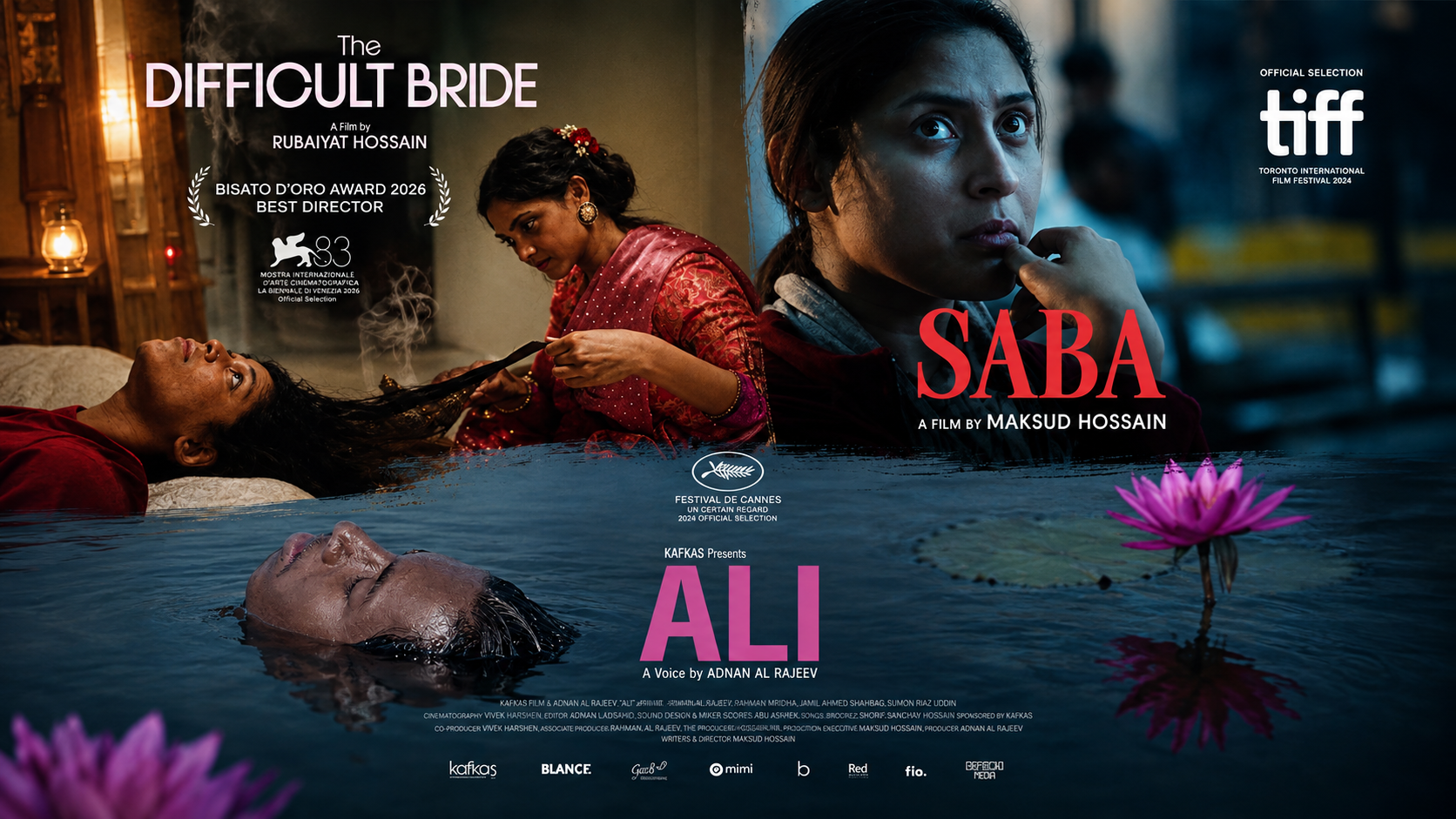
Bangladesh’s independent cinema is gaining international recognition as filmmakers secure places at prestigious film festivals, bringing stories of social realities, human struggles and personal aspirations to global audiences.
From Cannes and Busan to Toronto, Rotterdam and Venice, Bangladeshi films are increasingly attracting international attention. Their growing presence reflects the creative potential of filmmakers who continue to pursue ambitious projects despite limited budgets, uncertain financing and inadequate institutional support.
Cannes Opens New Doors
A significant milestone came in 2021 when Abdullah Mohammad Saad’s Rehana Maryam Noor, starring Azmeri Haque Badhan, was selected for the Un Certain Regard section of the Cannes Film Festival. The film explores institutional injustice, professional ethics and a woman’s struggle to challenge an oppressive environment.
Its selection highlighted how stories rooted in Bangladesh’s social realities can address universal themes and resonate with international audiences.
In 2023, three Bangladeshi films—Mostofa Sarwar Farooki’s Something Like an Autobiography, Biplob Sarkar’s Aguntuk and Iqbal Hossain Chowdhury’s Boli—were selected for the Busan International Film Festival. Boli won the festival’s New Currents Award, marking a significant achievement for Bangladeshi independent cinema.
The recognition demonstrated the diversity of storytelling emerging from Bangladesh and the potential of independent productions to reach audiences beyond the domestic market.
Toronto, Cannes and Karlovy Vary Bring Further Recognition
In 2024, Maksud Hossain’s Saba, starring Mehazabien Chowdhury, was selected for the Toronto International Film Festival. The film portrays a woman balancing family responsibilities with personal aspirations, exploring themes of sacrifice, emotional resilience and individual freedom.
The international momentum continued in 2025. Adnan Al Rajeev’s short film Ali competed at Cannes and received a Special Mention. Meanwhile, Mahede Hasan’s Sand City won the Grand Prix in the Proxima competition at the Karlovy Vary International Film Festival.
These achievements highlighted the growing international visibility of Bangladeshi filmmakers across different formats, from short films to feature-length productions.
Rotterdam and Venice Extend the Momentum
Bangladeshi cinema continued its international journey in 2026. Mezbaur Rahman Sumon’s Roid was selected for the Tiger Competition at the International Film Festival Rotterdam, while Mohammad Touqir Islam’s Delupi entered the festival’s Bright Future section.
Rubaiyat Hossain’s The Difficult Bride was also selected for the Orizzonti section of the Venice International Film Festival.
Together, these selections reflect a growing diversity of cinematic voices from Bangladesh, with filmmakers exploring different narrative styles and social perspectives while bringing local experiences to international audiences.
Financial Constraints Remain a Major Challenge
Despite these achievements, independent filmmakers continue to face significant obstacles. Financing remains uncertain, with many projects relying on personal investment, limited private funding, grants or international partnerships.
Distribution is another challenge. Festival recognition does not automatically guarantee theatrical releases, streaming deals or sustainable revenue. Many filmmakers struggle to secure the resources needed to promote their work and finance subsequent projects.
Industry observers argue that accessible funding, professional training, production infrastructure and stronger distribution networks are essential to building a sustainable filmmaking environment.
Film Expert Sanjoy Kumar Calls for Long-Term Support
Film expert Sanjoy Kumar believes international recognition reflects the creative potential of Bangladeshi filmmakers but stresses that festival success must translate into lasting industry development.
“Bangladeshi filmmakers have stories that can connect with audiences across cultures. International festival recognition is an important achievement, but sustainable progress requires reliable financing, institutional support and better distribution opportunities. Creating an environment where independent filmmakers can continue making films is essential for the future of Bangladeshi cinema,” Kumar said.
He also emphasised the importance of creating opportunities for emerging filmmakers and strengthening the professional support system needed to sustain creative talent.
Building a Sustainable Future
International film festivals can connect filmmakers with producers, distributors and potential co-production partners. However, lasting progress requires more than awards and selections. It depends on creating opportunities for filmmakers to develop projects, reach audiences and earn enough to continue working.
For Bangladesh, stronger institutional support, transparent funding programmes and improved distribution could help transform individual achievements into long-term industry growth.
The international journey of Bangladeshi independent cinema demonstrates that stories rooted in local experiences can resonate across borders. The challenge now is to build an environment where filmmakers can continue telling those stories and bring them to an even wider global audience.

Comment: