


Dhaka's air quality 2nd worst in the world this morning
Published:
২৯ এপ্রিল ২০২৫, ১২:২৮
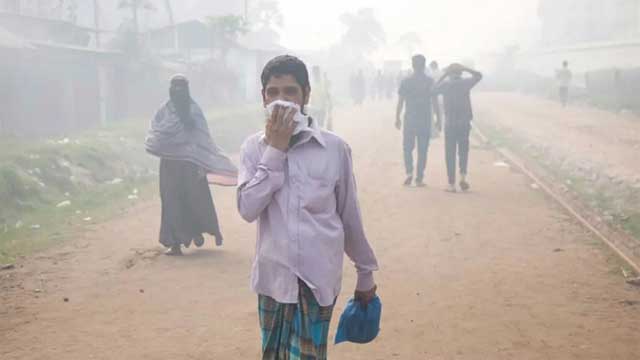
Dhaka, the overcrowded capital of Bangladesh, ranked second among cities with the worst air quality on Tuesday (29 April) morning, recording an Air Quality Index (AQI) score of 156 at 9:35 am.
According to the AQI classification, the air was categorized as "unhealthy," posing serious health risks to residents.
The city’s air quality had remained "moderate" over the past few days but deteriorated sharply overnight. AQI values between 150 and 200 are considered "unhealthy," meaning the entire population may begin to experience health effects, especially sensitive groups.
Pakistan’s Lahore topped the list with an AQI of 183, while India’s Delhi and Saudi Arabia’s Riyadh ranked third and fourth, respectively.
The AQI measures daily air quality and the potential health impacts of major pollutants, including particulate matter (PM10 and PM2.5), nitrogen dioxide (NO2), carbon monoxide (CO), sulfur dioxide (SO2), and ozone.
According to the World Health Organization (WHO), air pollution is a major global health threat, causing an estimated seven million deaths annually due to illnesses like stroke, heart disease, chronic respiratory diseases, and lung cancer.

Comment: