


Dhaka air quality ‘moderate’ today
Published:
৬ সেপ্টেম্বর ২০২৫, ১৫:১২
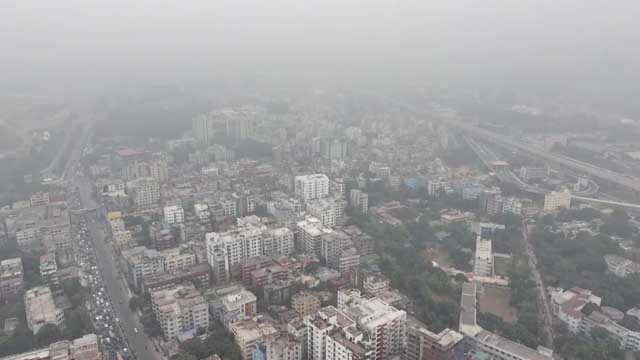
Dhaka, the overcrowded capital of Bangladesh, has ranked 26th on the list of cities with the worst air quality, recording an Air Quality Index (AQI) of 74 at 10:58 am on Saturday.
According to the AQI index, Dhaka’s air was classified as ‘moderate,’ indicating a light health risk. Such air quality has persisted in the city over the past few days.
AQI readings between 50 and 100 are considered ‘moderate,’ while values above 100 indicate higher health risks, ranging from ‘unhealthy for sensitive groups’ to ‘hazardous’ for readings above 301.
Democratic Republic of the Congo’s Kinshasa, Indonesia’s Jakarta, and the UAE’s Dubai topped the list with AQI scores of 130, 131, and 125, respectively.
The AQI, which reports daily air quality, informs residents about pollution levels and associated health risks. In Bangladesh, it is calculated based on five pollutants: particulate matter (PM10 and PM2.5), NO2, CO, SO2, and ozone.
Dhaka has long struggled with air pollution, which usually worsens in winter and improves during the monsoon.
According to the World Health Organization (WHO), air pollution causes an estimated seven million deaths worldwide annually, mainly due to stroke, heart disease, chronic obstructive pulmonary disease, lung cancer, and acute respiratory infections.

Comment: